

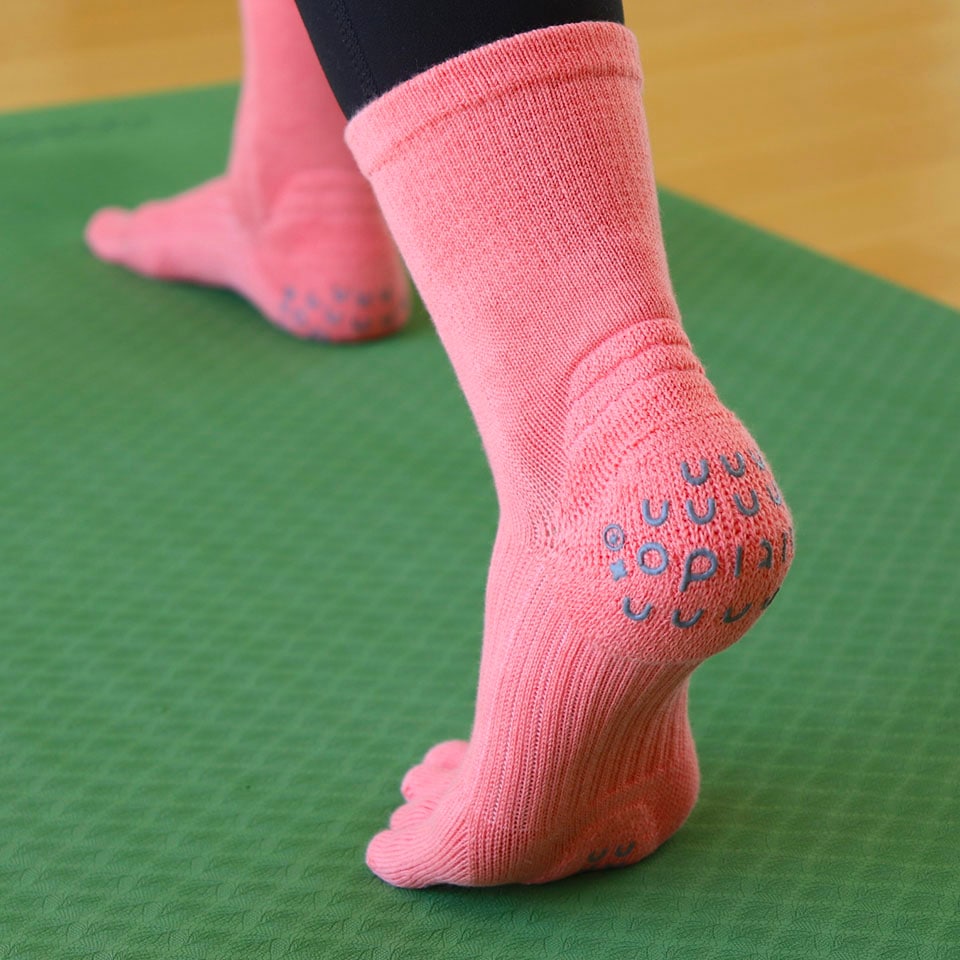

Bunions are a common foot problem in modern society. While the main symptom is the bending of the base of the big toe, it can affect not only foot pain but also gait, posture, and overall health.
To maintain healthy toes, it is important to activate the plantar muscles and maintain ankle flexibility. This article, based on an interview with Mr. Kosuke Morinaga, Lecturer at the Faculty of Comprehensive Rehabilitation, Hiroshima International University, explains in detail the mechanisms of bunions, preventive methods for maintaining healthy feet, and how five-toe socks can positively impact foot health.
What are bunions?
Generally, bunions refer to a condition where the big toe (hallux) bends "inward" toward the little toe, and the joint at its base protrudes inward, causing painful foot problems.

Characteristic symptoms include pain at the base of the big toe and inflammation due to friction with shoes. If left untreated, the protruding part may swell, or nerve compression may lead to numbness. In recent years, the number of bunion patients has been increasing, with a survey by the Ministry of Health, Labour and Welfare showing an approximately eightfold increase over 33 years from 1984 to 2017 (※1). They are particularly common among people in their 30s to 50s (※2), and over 90% of patients are women (※3).
※1)2020 Patient Survey, Disease Classification (Annual Trend Table by Disease) II. Summary of Results
※2)Chiba Medical Association, Foot Diseases "Bunions"
※3)Jinko-Kansetsu.com Consult a foot surgeon before bunions worsen! Treatment options are expanding
Why do bunions occur? Explaining the 3 main factors
There are several factors that contribute to bunions. This time, Mr. Kosuke Morinaga taught us about three of these factors that cause bunions. He says that anyone has the potential to develop bunions. These three factors act individually or in combination to manifest the symptoms.
1. Weakened plantar muscles

With less walking and an increase in desk work compared to the past, modern lifestyles provide fewer opportunities to use our feet. When the plantar muscles weaken, the ability to support the arch of the foot also diminishes, gradually leading to flat feet. If it progresses, it can lead to the development of bunions.
2. Stiff ankle joints
Ankle stiffness is also a factor that can lead to bunions. If flexibility is lost, the ankle cannot be used properly during walking, putting excessive strain on the front of the foot. A stiff ankle can cause the toes to point inward when walking, which can lead to excessive pressure on the big toe.
3. Choosing shoes that don't fit your feet
Wearing shoes that don't fit the width of your feet or high heels for extended periods can compress your toes, preventing them from moving freely. If you spend long hours in such a state, it can put a strain on your feet and increase the risk of deformation. In particular, narrow-toed shoes can push your big toe inward, making it more likely to cause or worsen bunions.
The Relationship between Bunions and Flat Feet
In many cases, bunions and flat feet often occur together.
Flat feet are a condition where the heel collapses inward, or the arch of the sole decreases due to relaxed plantar muscles.

The arch acts as a cushion to absorb shock during walking. If the arch malfunctions and is left untreated, it can lead to uneven propulsion during walking and uneven pressure on the sole of the foot, causing the forefoot to widen or calluses (hardened skin) to form on the sole.

In other words, weakened plantar muscles lead to flat feet, which in turn can progress to bunions.
Furthermore, restricted ankle movement can also weaken the calf muscles. The calves are often called the "second heart" and play a crucial role in pumping blood throughout the body. If this pumping function declines, it can lead to poor circulation and swelling. In addition, poor posture can also lead to upper body problems such as stiff shoulders and neck pain.
Health Impacts of Bunions
Bunions are a problem that can cause not only foot pain but also various effects on walking and overall health.
1. Impact on walking
The ideal way to walk correctly is to land on the heel, shift your weight forward, and then push off the ground with your toes. At the end of the stride, efficient propulsion is achieved by pushing off the ground primarily with the big toe, or the second toe (index finger), which is the longest toe.

However, when a bunion develops, the big toe cannot function properly, and the stride length shortens. A shorter stride length means more steps to reach the destination, and the distance per step is reduced. It also affects foot fatigue and blood circulation.
2. Decreased activity due to pain
Pain caused by bunions can affect the level of activity in daily life. Foot pain can make long walks or standing work difficult, naturally leading to a reduction in exercise.
A decrease in exercise leads to further weakening of the foot muscles, which in turn makes walking even more difficult, creating a vicious cycle. It is important to make an effort to do simple exercises, such as daily walks, that can be continued.
Prevention and Improvement Measures for Bunions
To protect your body and live a healthy life as you age, it's important to take measures against preventable problems. It is crucial to pay attention to the condition of your feet, which are the foundation of basic daily movements such as walking, running, and standing, and to take appropriate care.
1. Appropriate shoe selection and insoles
Choosing shoes that fit your feet properly is very important. When choosing shoes, if you wear socks that you would typically wear with those shoes, you can avoid problems such as the shoes being too tight or too loose. Also, because your foot moves forward slightly in the shoe while walking, proper space is needed in the toe area.
If you experience pain in the forefoot due to bunions, wearing shoes with a toe spring (upturned toe) or, if your ankles are stiff, choosing shoes or insoles with a slightly raised heel part can make walking easier. If you often wear business shoes or heels for work for long periods, alternating with comfortable athletic shoes on weekends or during commutes can help reduce the strain on your feet.
2. Combination with Pilates
Pilates is a fitness method that is expected to be effective in activating plantar muscles and improving ankle flexibility. Since it was originally developed as an exercise for the recuperation and rehabilitation of soldiers injured in war, it has the advantage of being doable without overexertion for people with low physical strength or injuries. Pilates involves focusing on the inner muscles and paying attention to how the toes are used, allowing you to engage with your body through subtle movements. Wearing five-toe socks during Pilates allows you to be conscious of the movement of each individual toe, making the exercise more effective. Combining Pilates to strengthen the plantar muscles with five-toe socks to support the feet can lead to more effective foot health.
Positive effects of five-toe socks on toe health
To prevent bunions, it is important to strengthen the plantar muscles and maintain the arch properly. For this, it is crucial to ensure that each toe can move freely. Five-toe socks, with their independent toe compartments, allow each toe to move freely, enabling natural movements like being barefoot. Some even come with arch support, so simply wearing them in daily life can help strengthen the plantar muscles.
Five-toe socks allow the big toe to push down firmly, more so than regular socks, making it easier to gain propulsion when walking. Additionally, they make it easier to feel each toe, which helps you become more aware of your walking style and notice any habits.
1. The Importance of Free Toe Movement
Walking barefoot on a sandy beach has long been known as an exercise to strengthen the feet. This is because the action of clenching the sand with each individual toe helps strengthen the plantar muscles. The key point here is that each toe can move freely and independently. If you can perform this action without going to the beach, you can train your plantar muscles in your daily life.
The movement of the big toe is particularly important, as its upward movement (dorsiflexion) is a crucial key to maintaining the arch of the foot. However, with regular socks where each toe cannot move freely, natural movement is restricted. That's why we recommend five-toe socks with arch support.

The ability to wrap each toe and allow each one to move freely is a unique strength of five-toe socks. Mr. Morinaga also recommends wearing five-toe socks in daily life as a very good preventive measure for bunions and to maintain the arch of the foot.
2. Supports activation of plantar muscles
In modern life, where people walk less than in the past, the plantar muscles are not sufficiently used. It is important to consciously activate them to prevent muscle weakness. If you can move your five toes freely, you can perform delicate movements such as pushing with your little toe or applying force with your big toe. These movements stimulate and activate the plantar muscles.
Pilates movements, which focus on and apply force to specific parts of the feet and body, can also be considered training to strengthen the plantar muscles. Wearing five-toe socks won't instantly strengthen your plantar muscles and cure bunions or flat feet in a day, but creating moments in your daily life to focus on your feet is the quickest way to improve problems.
Introducing knitido's recommended 5-toe socks!
In this chapter, we introduce five-toe socks recommended for bunions and flat feet. These items have received Mr. Morinaga's stamp of approval, as they are designed to be physiologically sound, considering the mechanisms of bunions and flat feet, and the skeletal structure of the foot. If you are experiencing foot problems, please give them a try.
Beauty Air Cushion Series

The Beauty Air Cushion series is a five-toe sock that supports beautiful posture with air cushions placed in the center of the forefoot and midfoot to support the arch of the foot. It features an original grip for stable wear during exercises such as Pilates and yoga.
Because they cover the ankles securely, you can enjoy various sports such as Pilates and yoga without chafing. They will also support beautiful posture during exercise.


THREE Standard Low Crew
Run Air Cushion Series

The Run Air Cushion series are five-toe socks featuring air cushions and arch support, ideal for sports such as Pilates, yoga, and running. They utilize an original elastic yarn stretch material that extends from the arch of the sole to the outer arch, providing firm support for foot stability and endurance. An original grip is also attached to the sole, ensuring a stable fit.


FIVE Marble Low Crew

A two-tone version of the Run Air Cushion series. This pair is recommended for those who want to maintain functionality while also caring about their appearance. The basic features are the same as the Run Air Cushion Marble Mesh. Available in 5 colors, so you can enjoy various coordination options.


FIVE Bicolor Ankle
Summary
This time, we explained in detail the causes and health effects of bunions, as well as preventive care methods, based on the insights of Mr. Kosuke Morinaga. Bunions can cause not only foot pain but also affect gait and posture, potentially impacting overall health. To prevent them, it's crucial to choose appropriate footwear, engage in daily care, and adopt lifestyle habits that encourage free toe movement.
Five-toe socks allow each toe to move independently, helping to restore the foot's natural function and support comfortable walking. By combining them with exercises like Pilates, you can more effectively maintain foot health.
knitido offers a variety of five-toe socks that support foot health and comfortable walking. To restore the natural movement of your toes and make your daily walks more enjoyable, please find the pair that suits you best.
◼︎ Supervised by

Kosuke Morinaga / Lecturer
Biography: After working as a prosthetist and orthotist overseas and in Japan, he became a lecturer at the Faculty of Comprehensive Rehabilitation, Department of Rehabilitation, Hiroshima International University in 2014.


